Textiles
Conservation of garments, embroidery, lace, tapestry, carpets, furs and leather. All textile treatments always include insect pest eradication as part of our incoming work quarantine processes.
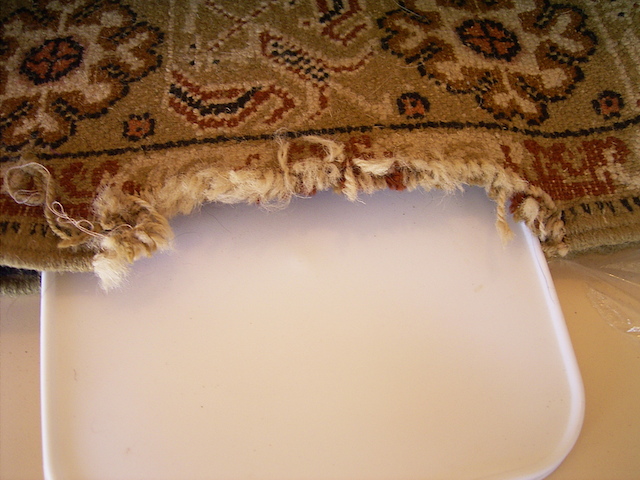
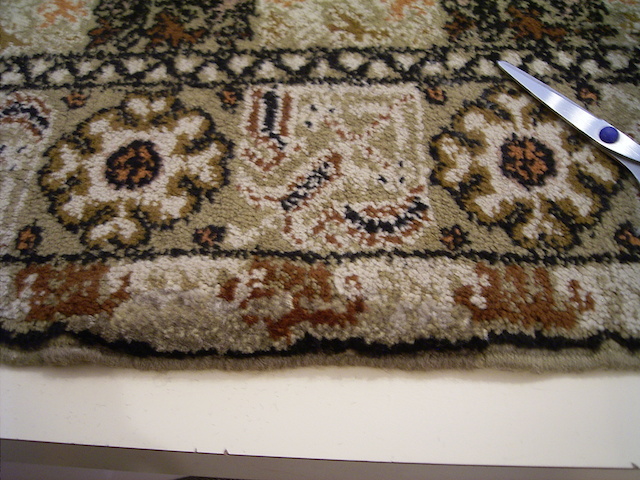
Shown is a carpet repair. The pattern repeat was copied from further along the border and losses were replaced with custom dyed wool.
Objects
Conservation of glass( yes even glass), ceramics, timber, metals, ethnographic objects, plastics and rubber.
Note: Ceramics repairs where we need to undo previous adhesive repairs can be very time consuming. It is preferable that people don't "have a go" before coming to us.
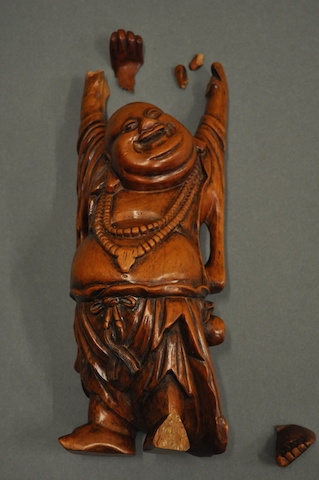
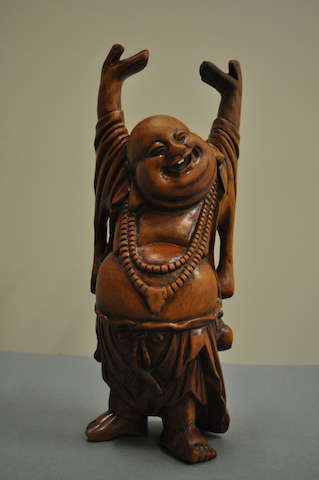
Shown is a carved timber buddha statue which had broken feet and fingers and was missing much of one hand. Broken sections were adhered, a fill sculpted to replace the loss and the new section inpainted.
Paintings and frames
Paintings can be on canvas, baird paper in oil acrylic watercolour or even mixed media. Our team combined can offer stabalisation and cleaning to conserve your painting assets. We have an in house gilder and frame specialist able to make sure the entire project is done in one place.
Paper
Conservation of paper, books and photographs. Robin Tait is an award winning bookbinder and paper conservator making her them ost acomplished book conservator available. Robin has undertaken specialist training in the conservation of Islamic bindings and wooden bindings.
Karen Holloway is an exceptional Paper conservator with advanced training in photographic conservation.
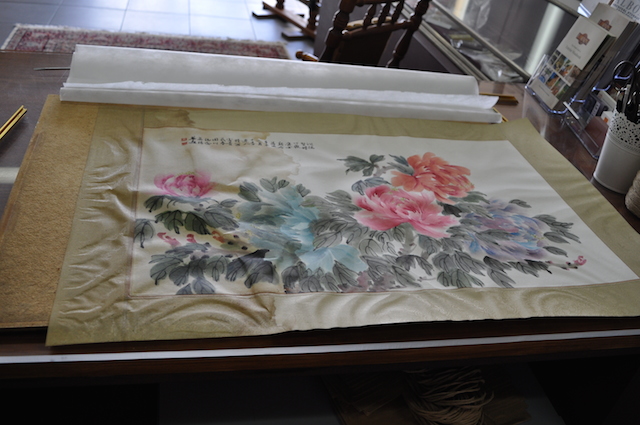
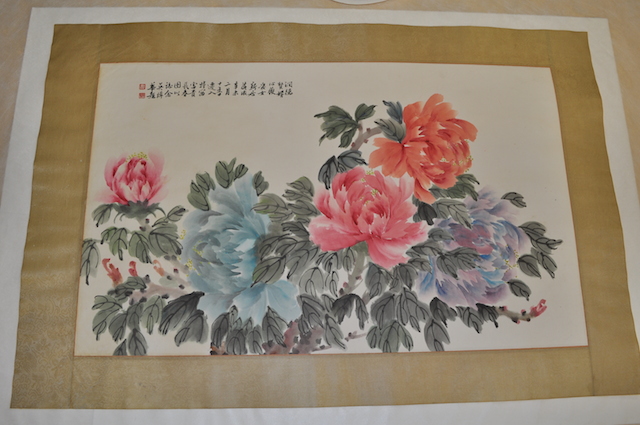
Shown is a flood damaged watercolour. Tide lines were removed and the surface ripples significantly reduced.
Archival Materials
These are often very hard to source in small quantities. Endangered Heritage can supply Mylar film, Tyvek sheeting and Softlon foam by the metre. We sell acid free archival boxes as single units and we import non-acidic and buffered tissue paper which is sold by the single sheet.
Note: The label "acid free" in Australia means that acid was not used in the production of the paper. It does not mean that the paper is pH7 or non-acidic. There are no manufacturers of non-acidic tissue paper in Australia. We source our supplies from America and all shipments are pH tested upon arrival.
Tools and Supplies
The conservation industry has some quite specialist tool and materials requirements. Endangered Heritage stock a range of conservation and art manufacture tools including bone folders, septum elevators, spatulas, pigments, animal skin and parchment glues, stainless steel entymology pins, curved microsurgery needles, gold leaf, squissors, tweezers, inks, dispersions, gums and resins, cotton tape and more.
Collection Management
The staff at Endangered Heritage all have over 15 years of experience in the Art and Museum sector. We are able to assist with collection surveys, treatment prioritisation and triaging, disaster response and recovery, collection handling training, support design and mannequin manufacture. If you have a collection and you need advice and support, we are here to help.
Phone; (02) 62828386
